Logo

Evanston Symphony Orchestra

Lawrence Eckerling, Music Director

Passionate Expression
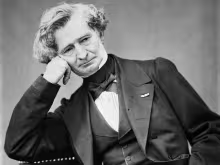
Hector Berlioz (1803-1869) was a French composer of the romantic era best known for his piece Symphonie Fantastique. In 1843, Berlioz wrote Roman Carnival Overture, reworked from his 1838 opera Benvenuto Cellini. While the opera was decidedly unpopular, his overture was an immense success and became an independent concert piece. Berlioz said of his compositions “the prevailing characteristics of my music are passionate expression, rhythmic animation, and unexpected turns.”
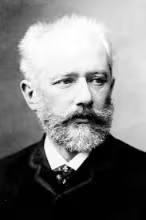
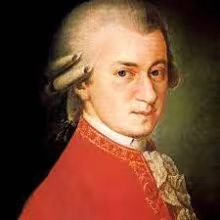
Pen Pals

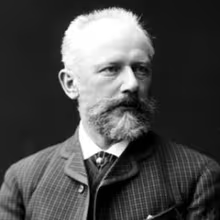
When Pyotr Ilyich Tchaikovsky (1840-1893) began composing Symphony No. 4 in F Minor between 1877 and 1878, he wanted to dedicate the piece to Nadezhda von Meck, a patron of the arts who supported him financially. The two never met in person, but they would write letters to each other discussing Tchaikovsky’s music as their friendship developed over their correspondence. While Tchaikovsky was typically a harsh critic of his own works, he was very proud of Symphony No. 4, as indicated by his letters to von Meck. In fact, Tchaikovsky wrote, “dedicated to my best friend” on the piece.

Mozart and the Golden Age of Music in Vienna

The middle of the 18th century was a magical time for music in the city of Vienna. By the 1780s, Wolfgang Amadeus Mozart, Josef Haydn, and Christof Gluck had ushered in Vienna’s first golden age of music. When Mozart wrote his 23rd piano concerto there in 1786, the city was bustling and alive with music. Beethoven and Schubert would carry this golden age into the next century.

The Composer and the Poet

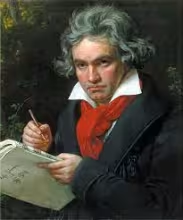
In 1809, Ludwig van Beethoven received a commission from Joseph Hartel, manager of the Court Theaters in Vienna, to compose the overture and incidental music to Johann Wolfgang von Goethe’s tragic play, Egmont. Hartel sought to bring plays by Goethe and Schiller to the theater, and Beethoven was only too eager for the opportunity to set a work by the leading German intellectual of the time and one of the composer’s personal heroes to music.

The Tenderness and Turmoil of Romeo and Juliet

First performed in March of 1870, Tchaikovsky’s Romeo and Juliet is a beautiful piece full of tenderness and turmoil, reflecting the themes in Shakespeare’s story of love desired and denied.  Yet, there is a thread in the story that is also emblematic of Tchaikovsky’s own life and work. It is the thread of bridging two worlds, and of difficult love and relationships.

Transcontinental Transcendence

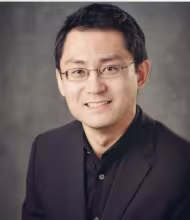
GRAMMY-nominated composer Zhou Tian was born into a musical family in Hangzhou in 1981. His father was a composer for television shows, and Zhou often worked with him, having already begun playing piano in recording sessions and arranging music by the age of 12. The China of Zhou’s youth was one marked by economic reforms, which led to substantially increased incomes; greater availability of food, housing, and other consumer goods; and a rapid exodus of workers from traditional agriculture into manufacturing. Zhou’s own exodus, …

A Centennial Celebration

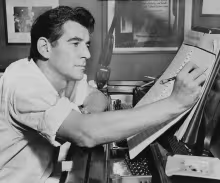
Candide is based on the 1758 novella by Voltaire, which satirized the fashionable philosophies of the day, particularly the tortures inflicted by the Catholic Church on supposed heretics during the Inquisition. Noting parallels to the controversial activities of the House Un-American Activities Committee, which sought to root out Communism in the United States, playwright Lillian Hellman proposed to Bernstein in 1953 that they adapt the novella for the musical theater.

Celebrating the Bernstein Centennial with Chichester Psalms

Although Bernstein is probably best known for West Side Story, the composer, conductor, and pianist composed many pieces of music throughout his life including Chichester Psalms, an orchestral work with choir and boy treble. The ESO will be joined by the North Shore Choral Society and William Lewis, boy solo, to perform this Bernstein masterpiece.

Stand Up for Haydn

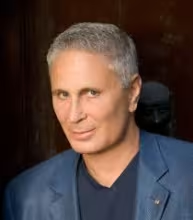
John Corigliano’s Promenade Overture is a modern take on a classical masterpiece.

The composer admitted as much in his program notes from the 1981 work. He commented that Franz Joseph Haydn’s Farewell Symphony caught him “off guard.” During the final movement of this symphony, the players exit until only a pair of violins remains. Intrigued by the notion of reversing the process — orchestra members entering at the beginning of a work while playing — Corigliano wrote an overture that does just that.

Brahms: Dramatic Romantic

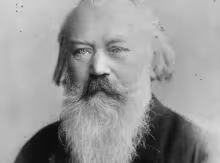
In 1853, at the age of 20, a young Johannes Brahms nervously presented himself to Robert and Clara Schumann. He was the leading composer of the day, and she was a prominent piano soloist and composer in her own right. This fateful meeting would lead to Brahms’ public introduction, and to a lifelong relationship, both musical and personal, with the couple. While Brahms owed the launch of his career to this great composer, he struggled under the weight of Schumann’s description of him as “a chosen one,” and in the shadow of Beethoven’s revolutionary Symphony No.