Logo

Evanston Symphony Orchestra

Lawrence Eckerling, Music Director

Orchestral Wizardry and Russian Folk Music
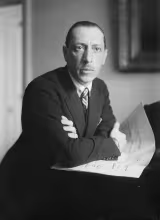
Igor Stravinsky (1882–1971) was a Russian composer and conductor with French and American citizenship. He is widely considered one of the most important and influential composers of the 20th century and a pivotal figure in modernist music. 
The Post-Tchaikovsky Generation

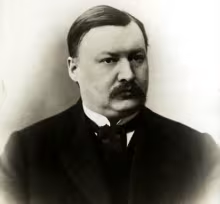
Alexander Glazunov (1865-1936) was a late Romantic Russian composer, conductor, and music teacher following the “Tchaikovsky era.” 

Glazunov’s musical career started early – he began studying piano at age 9 and composing two years later. His earliest compositions caught the attention of Nikolai Rimsky-Korsakov, who taught Glazunov privately and later considered him a junior colleague.

Spain in Sound: Romance, Drama, and Heat

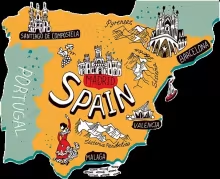
Spain has long been the subject and source of artistic creativity, with many drawn to its beauty, rhythms, and heat. In this program, that spirit comes to life through two very different lenses: the outsider’s fascination with Georges Bizet and the insider’s interpretation by Manuel de Falla.

Finding Inspiration In Other Works

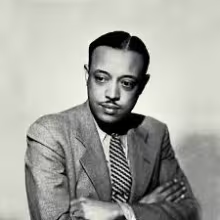
American composer William Grant Still (1895-1978) is known as the “Dean of African-American Classical Composers,” having written nearly 200 works including symphonies, ballets, operas, and more. In 1931, his first major orchestral composition, Symphony No. 1 “Afro-American,” was performed by the Rochester Philharmonic conducted by Howard Hanson. Not only was it the first time a complete score by an African American composer was performed by a major orchestra, but it also was one of the most popular symphonies by an American composer at the time. 

Mutual Admiration Society

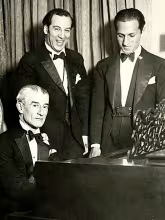
At first glance, George Gershwin and Maurice Ravel might seem to occupy two very different musical worlds, yet they both shared a passion for jazz.

A Trip to the Old West

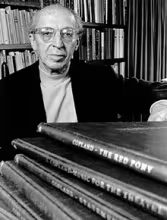
Aaron Copland, born in Brooklyn on Nov. 14, 1900, was destined to become one of America's most renowned composers. He first learned to play the piano from his older sister; at 16, he studied under the tutelage of Rubin Goldmark in Manhattan, which also allowed his interest in classical music to flourish, attending concerts by the New York Symphony and Brooklyn Academy of Music.

Vibrant Saxophone Melodies

The first saxophone was invented around 1840 in Brussels by Adolphe Sax, whose family was a maker of woodwind instruments. The metal-bodied, single-reed instrument was developed through the rest of the 19th century, primarily in French-speaking regions. Music with sax began to emerge in the 19th century and was used strikingly in important orchestral works in the early 20th. Earlier this season, you’ve heard saxophones at Pick-Staiger in both Rachmaninoff’s Symphonic Dances and Gershwin’s An American in Paris.

One-Hit Wonder

French composer Paul Dukas (1865-1935) is best known for a single orchestral work, The Sorcerer’s Apprentice. Based on a 1797 poem by Wolfgang von Goethe, the piece was written in 1897 and premiered later that same year in Paris with Dukas himself conducting the performance. The piece was an instant hit.

Let Your Spirit Soar

When you hear the Evanston Symphony play Pictures at an Exhibition, you will experience the beauty and originality of the paintings of Russian artist Viktor Hartmann (1834–1873) as interpreted by his good friend and composer Modest Mussorgsky (1839–1881). The piece will take you on a stroll through a late 19th-century gallery at St. Petersburg’s Imperial Academy of the Arts.

The One and Only

Pyotr Ilyich Tchaikovsky (1840-1893), the Russian Romantic com