Logo

Evanston Symphony Orchestra

Lawrence Eckerling, Music Director

Pen Pals

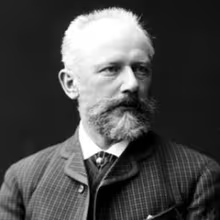
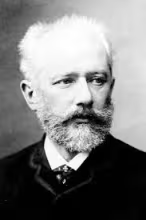
When Pyotr Ilyich Tchaikovsky (1840-1893) began composing Symphony No. 4 in F Minor between 1877 and 1878, he wanted to dedicate the piece to Nadezhda von Meck, a patron of the arts who supported him financially. The two never met in person, but they would write letters to each other discussing Tchaikovsky’s music as their friendship developed over their correspondence. While Tchaikovsky was typically a harsh critic of his own works, he was very proud of Symphony No. 4, as indicated by his letters to von Meck. In fact, Tchaikovsky wrote, “dedicated to my best friend” on the piece.
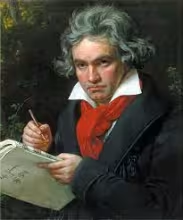
Mozart and the Golden Age of Music in Vienna

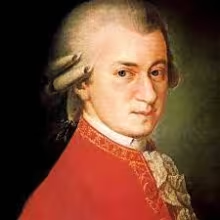
The middle of the 18th century was a magical time for music in the city of Vienna. By the 1780s, Wolfgang Amadeus Mozart, Josef Haydn, and Christof Gluck had ushered in Vienna’s first golden age of music. When Mozart wrote his 23rd piano concerto there in 1786, the city was bustling and alive with music. Beethoven and Schubert would carry this golden age into the next century.

The Composer and the Poet

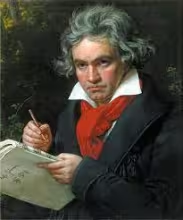
In 1809, Ludwig van Beethoven received a commission from Joseph Hartel, manager of the Court Theaters in Vienna, to compose the overture and incidental music to Johann Wolfgang von Goethe’s tragic play, Egmont. Hartel sought to bring plays by Goethe and Schiller to the theater, and Beethoven was only too eager for the opportunity to set a work by the leading German intellectual of the time and one of the composer’s personal heroes to music.

The Tenderness and Turmoil of Romeo and Juliet

First performed in March of 1870, Tchaikovsky’s Romeo and Juliet is a beautiful piece full of tenderness and turmoil, reflecting the themes in Shakespeare’s story of love desired and denied.  Yet, there is a thread in the story that is also emblematic of Tchaikovsky’s own life and work. It is the thread of bridging two worlds, and of difficult love and relationships.

Transcontinental Transcendence

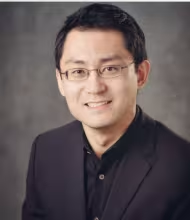
GRAMMY-nominated composer Zhou Tian was born into a musical family in Hangzhou in 1981. His father was a composer for television shows, and Zhou often worked with him, having already begun playing piano in recording sessions and arranging music by the age of 12. The China of Zhou’s youth was one marked by economic reforms, which led to substantially increased incomes; greater availability of food, housing, and other consumer goods; and a rapid exodus of workers from traditional agriculture into manufacturing. Zhou’s own exodus, …

Ode to Joy

During Ludwig van Beethoven’s time (1770-1827), adding a chorus and vocal soloists to a symphony was never done and was considered highly unusual. Of course, that did not stop the composer from including a choral component in the fourth movement of his ninth symphony, making him the first major composer to accomplish this. Despite Beethoven’s hearing loss, he was still able to compose music, but conducting and performing at concerts (he was a talented pianist) was becoming problematic. 

A Community of People

Since its inception in 1936, the North Shore Choral Society (NSCS) has grown to combine 120 voices in what is the preeminent mixed chorus on the North Shore. Over the years, it evolved from programming shorter works to presenting major choral compositions such as Bach’s St. Matthew Passion and Brahms’ German Requiem.  

The "Dean of African-American Composers"

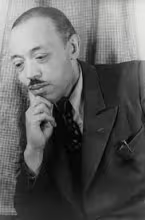
Born in Woodville, Miss., in 1895 and raised in Little Rock, Ark., William Grant Still was an arranger, conductor, multi-instrumental performer, and composer who blazed trails for African-American artists. He was the first African-American composer to have a symphony performed by a professional orchestra in the U.S., the first to conduct a major symphony orchestra in the United States, and the first to have an opera performed by a major opera company. His Troubled Island was also the first opera by an African-American to be nationally televised.

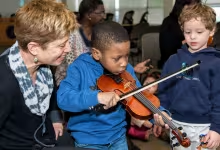
Music In Your World Brings Music Education to Evanston Preschoolers

"Equitable access to a complete education is a human right."
–League of American Orchestras, July 2020

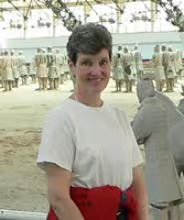
Linda Keller Retires After 56 Years With the ESO

Although her family wasn’t musical, Linda Keller fell in love with marching bands as a little kid in Peoria. She realized she’d have to learn play an instrument to march in a band, but that was merely the means to her dream: To march! In a band!