Logo
Evanston Symphony Orchestra
Lawrence Eckerling, Music Director
The Post-Tchaikovsky Generation
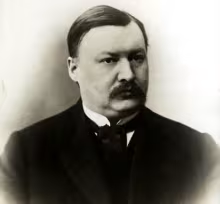
Alexander Glazunov (1865-1936) was a late Romantic Russian composer, conductor, and music teacher following the “Tchaikovsky era.”
Glazunov’s musical career started early – he began studying piano at age 9 and composing two years later. His earliest compositions caught the attention of Nikolai Rimsky-Korsakov, who taught Glazunov privately and later considered him a junior colleague.
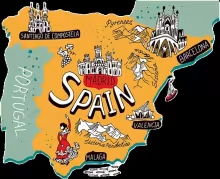
Spain in Sound: Romance, Drama, and Heat
Jazzy, Gritty, Romantic Score and Suite
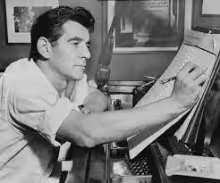
Born on August 25, 1918, in Lawrence, MA, to Ukrainian-Jewish immigrant parents, Leonard Bernstein was a child prodigy who began playing the piano at age 10. Despite his father's initial opposition, he flourished in music, studying at Harvard University and the Curtis Institute of Music, and later became a protégé of conductor Serge Koussevitzky at Tanglewood.
A Modern Twist on a Classic
Paul Whiteman—a bandleader, composer, orchestral director, and violinist—wanted a piece that combined jazz and classical music for “An Experiment in Modern Music” concert to be premiered on February 12, 1924, at Aeolian Concert Hall in New York City. He commissioned George Gershwin (1898-1937) to compose the piece.
Where Charm Meets Brilliance
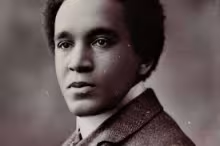
Born in 1875 to a white English mother, Alice Hare Martin, and a Sierra Leonean father, Samuel Coleridge-Taylor was raised by his mother and never knew his father, who had moved back to Sierra Leone before Samuel was born. Alice named Samuel after poet Samuel Taylor Coleridge, and, being from a family with many talented musicians, her father began teaching Samuel violin at a young age. It did not take very long for Samuel to surpass his grandfather’s abilities, at which point he enrolled in the new Royal College of Music.
Romantic Era Visionary
Robert Schumann (1810–1856) was a German composer and pianist of the early Romantic era. He began piano lessons at age six and showed an early gift for capturing character and emotion in melody. He composed in all the main musical genres of the time, writing for solo piano, voice and piano, orchestra, chamber groups, choir, and opera. His works typify the spirit of the Romantic era in German music.
Not Associated With Any Emperor
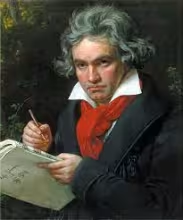
Ludwig van Beethoven’s (1770-1827) fifth and final piano concerto was commissioned by Archduke Rudolf, his friend and student. Beethoven began writing the piece in 1809, but the Napoleonic Wars made this difficult as Napoleon’s armies invaded Vienna. Nevertheless, Beethoven completed the piece, but the war delayed its premiere.
From Rivals to Lovers
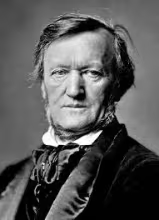
Overcome by despair for his forbidden love and betrayal of his uncle, King Marke, Tristan casts his sword to the ground and allows himself to be impaled by his former friend’s sword. Tristan sees his own death as the only way to consummate his love with Isolde, whose fiancé he had killed before the start of the opera. Their relationship, originally defined by mortal rivalry, is transformed when the poison they were to drink to alleviate their grief is replaced with a love potion.
Charm and Passion
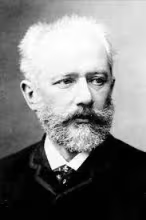
Pyotr Ilyich Tchaikovsky was born on May 7, 1840, in Votkinsk, a small town in Vyatka Governorate within the Russian Empire. He had five brothers and one sister, with whom he was very close. He was initially educated for a career as a civil servant. Still, when the opportunity to study music arose, he took full advantage and entered the newly formed Saint Petersburg Conservatory, graduating in 1865.
Pagination
- Page 1
- Next page