
You are here

Evanston Symphony Orchestra | Evanston Illinois’ Community Orchestra playing classical music concerts at Pick Staiger Hall | 2014-2015 Season

  • Subscribe To The
    2014–15 Season

    Save more than 30%

    Get the best seats

    Free exchanges*

    Receive KeyNotes and special invites

    * some exceptions

  • Our Next Concert
    Russian Rhapsodies

    Sunday, October 26, 2014

    Weinberg

    Rachmaninoff

    Prokofiev

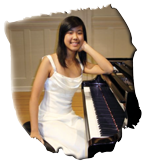
    with Kate Liu, Piano

    Kate Liu, Piano
  • An Evanston Symphony Holiday Concert

    Sunday, December 7, 2014 — 3:00 pm

    Make sure your holiday season starts with the best holiday event in Evanston!

    Special rates for a family package of 2 adult tickets and 3 children’s tickets.

  • Holiday Bazaar

    Sunday, December 7, 2014 — 2:00 p.m. – 5:30 p.m.

    Come to the concert early (or stay after) to purchase unique gifts sold by artisans from the Homegrown Artists Guild and other local businesses.

2026–2027 Season: The Love of Music

  •  
  •  
  •  
  •  

Musical Insights

Free Pre-Concert Preview Series!

October 16, Friday, at 1:30 pm

Enhance your concert experience with a sneak preview — Composers come alive and their passions take center stage when ESO Maestro Lawrence Eckerling takes you on an insider’s tour of the history and highlights behind the music.

Irina Muresanu and Larry Eckerling will be playing the first movement from Beethoven's Spring Sonata No. 5 at Musical Insights.

Friday, October 16 at 1:30 pm,
Merion’s Crystal Ballroom at
529 Davis St, Evanston.
FREE and open to the public.
Please RSVP to 847-570-7815.

The Merion
Light refreshments will be served and casual tours of apartments will be available after the program.

Give the gift of music

Treat a friend or relative to the ESO

Give the gift of music by ordering directly from our website and purchasing a custom gift certificate in any denomination of your choice! Certificates may be redeemed for single ticket or season subscriptions for any of our concerts.

You will receive an electronic gift certificate or we can mail the certificate to you or directly to the recipient.

Holiday Concert Features Symphonic Splendor
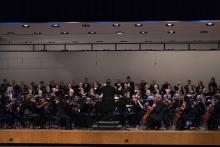
What better way to ring in the concert and the season than with James M. Stephenson’s Holiday Fanfare Medley, which brings together some of the oldest and most beloved Christmas carols (Il est Né, le Divin Enfant; Bring a Torch, Jeanette, Isabella; We Three Kings; Pat-A-Pan; Come All Ye Shepherds; Good King Wenceslas). These bright renditions full of brass and bells will evoke the magic of the season, yet even these ancient tunes do not reflect the oldest of the holiday traditions.
➨ Learn More!

First Impressions Are Not Always Correct

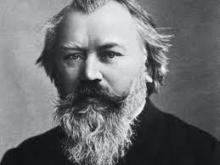
Before the premiere of Symphony No. 4 in October 1885, Brahms played the piece for some close friends and critics on the piano. Their reactions were far from positive and encouraged the composer to make significant changes to the piece. Naturally, Brahms became overwhelmed with self-doubt and was not confident his final symphony would survive beyond its premiere. Brahms was a perfectionist and would discard pieces he composed because he didn’t think they were good enough. Thankfully he kept Symphony No. 4 and the piece premiered as is.

➨ Learn More!

Mendelssohn's Masterpiece

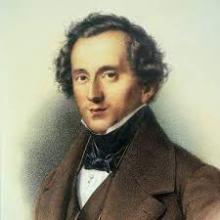
It was March 13, 1845, in Leipzig, Germany, and after six years in development, Mendelsohn’s Violin Concerto in E Minor made its premiere. Musical premieres are not always warmly received, but this concerto was immediately popular. Its development famously began in a letter from Mendelssohn to his concertmaster, Ferdinand David, in which he stated, “I should like to write a violin concerto for you next winter.

➨ Learn More!

The (Only) Optimistic Opera of Richard Wagner

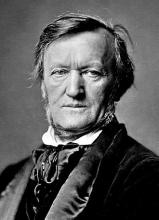
Richard Wagner is widely lauded as the premier composer of German opera with a place in the history of music that cannot be denied. In addition to ushering German Romantic opera to its highest point, Wagner created the new genre of music drama, in which the music is continuous throughout each act rather than being divided into concrete arias, recitative (speech-singing that carries the story forward), or other set numbers.

➨ Learn More!

Pages