Theme and Variations
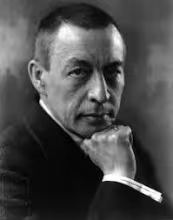
Theme and Variations
First Impressions Are Not Always Correct
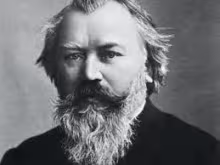
Before the premiere of Symphony No. 4 in October 1885, Brahms played the piece for some close friends and critics on the piano. Their reactions were far from positive and encouraged the composer to make significant changes to the piece. Naturally, Brahms became overwhelmed with self-doubt and was not confident his final symphony would survive beyond its premiere. Brahms was a perfectionist and would discard pieces he composed because he didn’t think they were good enough. Thankfully he kept Symphony No. 4 and the piece premiered as is.
Mendelssohn's Masterpiece
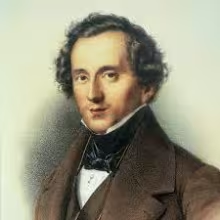
It was March 13, 1845, in Leipzig, Germany, and after six years in development, Mendelsohn’s Violin Concerto in E Minor made its premiere. Musical premieres are not always warmly received, but this concerto was immediately popular. Its development famously began in a letter from Mendelssohn to his concertmaster, Ferdinand David, in which he stated, “I should like to write a violin concerto for you next winter.
The (Only) Optimistic Opera of Richard Wagner
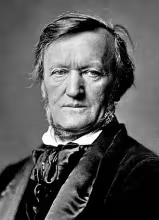
Richard Wagner is widely lauded as the premier composer of German opera with a place in the history of music that cannot be denied. In addition to ushering German Romantic opera to its highest point, Wagner created the new genre of music drama, in which the music is continuous throughout each act rather than being divided into concrete arias, recitative (speech-singing that carries the story forward), or other set numbers.
Transcendent Logic
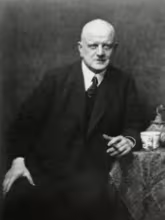
Even though Sibelius’ pieces such as Finlandia are more popular, his Symphony No. 1 is no less important. Sibelius premiered his Symphony No. 1 in 1899 and revised it in 1900.
Symphony No. 1 starts off its first movement slowly with a clarinet over a soft timpani roll and moves into a main theme in the strings. A contrasting theme is picked up by the woodwinds, then a standard development and recapitulation follow. The movement ends with two soft pizzicato chords in the strings.
Whimsical Woodwind
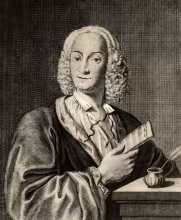
√While little is known about Antonio Vivaldi’s inspiration or his method of composition for the Piccolo Concerto, it is clear that the popular Italian composer was incredibly prolific; he penned upwards of 500 concertos, and more than two-thirds of them were written for solo instruments. Originally intended for the “flautino,” a high-pitched baroque recorder equivalent to today’s piccolo, the piece exhibits several characteristics of the baroque concerto that Vivaldi made standard during the era.
Not a Traditional Folk Melody
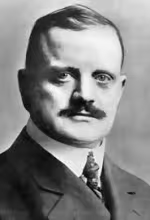
Jean Sibelius composed Finlandia for orchestra in 1899, and it became an overnight sensation. The piece was a political protest supporting the freedom of the Finnish press which was increasingly being controlled by the Russian Empire. Finlandia is a tone poem, an orchestral composition inspired by what the title of the piece refers to. (In Finlandia’s case, nationalism.) The piece premiered in the composer’s native Finland and was performed under various names to avoid this censorship.
Symphonic Smetana, Representing the Czech Sound
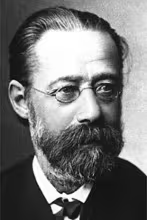
Bedrich Smetana’s The Bartered Bride is a three-act comic opera that is regarded as a major contribution toward the representation of Czech music in the classical music sphere. It was first performed at the Provisional Theatre in Prague on May 30, 1866.
The Chicago Sound

The musicians of the Chicago Symphony Orchestra are known for their distinctive “Chicago Sound,” marked by the precision, clarity, and power that have defined the Orchestra as a world-class institution. As the longest-serving clarinetist in the Orchestra’s history, Soloist John Bruce Yeh has had intimate experience with this high standard of performance. Composer James Stephenson is also familiar with this unique sound, having grown up listening to the CSO during his childhood in suburban Chicago.