Logo

Evanston Symphony Orchestra

Lawrence Eckerling, Music Director

17th-Century Events, 20th-Century Music
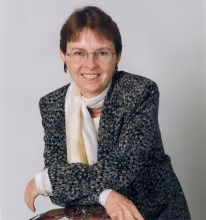
Linda Robbins Coleman is a native of Des Moines, Iowa. A Drake University graduate, Coleman was Composer-in-Residence for Drake Theatre, scoring 35 plays ranging from the ancient Greeks to the moderns from 1977-1997. An accomplished pianist, Coleman has been performing since the age of 6 and worked professionally as a jazz and classical soloist and collaborative pianist. Coleman is a published poet and writer, and for four decades she served as collaborator, research associate, and editor with Professor William S. E. Coleman.
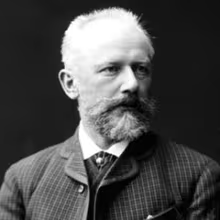
Emotional Romanticism in Musical Form

Tchaikovsky's Symphony No. 4 in F minor, Op. 36, was written in 1877, a momentous year for the composer. Tchaikovsky dedicated his Symphony No. 4 to his patroness, the heiress Nadezhda von Meck. He had begun composing the symphony not long after Meck had entered his life. He would complete it in the aftermath of his catastrophic marriage and claimed in a letter she would find in it "an echo of your most intimate thoughts and emotions."

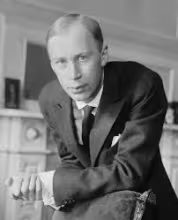
An Unexpected Journey

It was just over a year after the Russian Revolution when Prokofiev first left home to travel west to further his career, having secured permission from the commissar of culture under Vladimir Lenin. He made successful inroads in Chicago, and in just a few months, Prokofiev made his American debut with the Chicago Symphony Orchestra on December 6, 1918. The multitalented composer appeared as soloist for his First Piano Concerto and conductor for his Scythian Suite, and the Chicago audience responded to the performance by demanding seven curtain calls.

Composing for a ballet

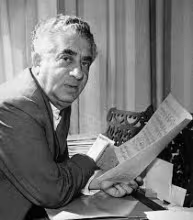
Aram Khachaturian, Armenia’s most important composer, is known around the world for his ballet music. He composed the music for Gayane, a ballet in three acts, that tells the story of a woman in an unhappy marriage who falls in love with another. The ballet premiered in 1942 by the Kirov Ballet, with the “Sabre Dance” being one of its most recognizable tunes.

Symphonic Satire and Beautiful Moments in an Obscure Opera

If something becomes popular, it will be made fun of. Gordon Jacob’s The Barber of Seville Goes To The Devil is a prime example of musical parody. Gioachino Rossini’s original opera, The Barber of Seville has been massively popular since it was first performed in 1816. Anyone marginally aware of the opera can hum tunes featured in the overture to the opera. In 1960 Jacob composed The Barber of Seville Goes To The Devil as a humorous homage to Rossini’s original.

A Successful Sequel

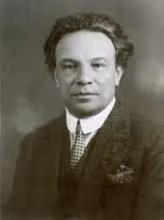
Ottorino Respighi, one of the great composer-conductor-pianists of his time, was born in Bologna and studied in St. Petersburg under Rimsky-Korsakov and in Berlin under Bruch. However, it was in Rome, where Respighi settled in 1913, that he found his true inspiration.

A Popular Concerto and a Suite with Two Versions

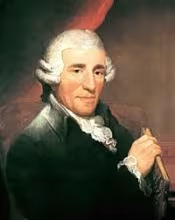
Haydn composed his Trumpet Concerto in E Flat in 1796 for his friend Anton Weidinger, who was also the developer of the keyed trumpet that could play chromatically. Unlike the natural trumpet, the keyed trumpet had four to six holes or keys similar to the flute; however, the keyed trumpet was ultimately not successful due to its poor sound quality. (Trumpets used today are called valved trumpets and were first introduced in the 1830s.) In fact, the piece is considered one of Haydn’s most popular concertos and is a favorite of trumpet players and classical music lovers everywhere.

Music Fit for a King

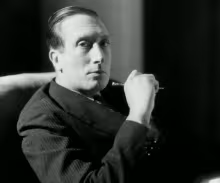
As the monarchy is central to the history and government of England, so it is part of its musical heritage. Crown Imperial, also known as Coronation March, came to life during a turbulent time for the British crown. Composer William Walton originally composed the march for King Edward VII’s coronation, set for May 12, 1937. However, when Edward abdicated the throne in 1936, his brother, King George VI, became king to the tune of Crown Imperial instead.

Fanciful Folk Songs

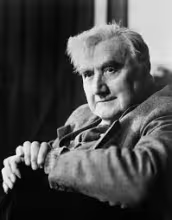
Ralph Vaughan Williams was among the wave of European composers of the time who were interested in utilizing and recording folk music. Vaughan Williams found inspiration in English literature and traditional song, often quoting or imitating British folk tunes in his compositions. He was even a member of the English Folk Song Society, whose members sought to collect traditional music of the British Isles. Nine of these tunes found a place in the composer’s three-movement English Folk Song Suite, which was originally written for military band.

Theme and Variations

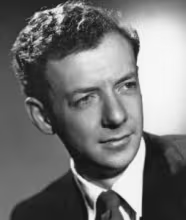
If you think the main themes from Benjamin Britten’s The Young Person’s Guide to the Orchestra and Henry Purcell’s Rondeau from Abdelazer Suite are similar, you’re right. Purcell, a Baroque composer, wrote incidental music in 1695 to accompany performances of the play by Aphra Behn, Abdelazer, also known as The Moor’s Revenge. The second movement of the 10-movement suite is one of Purcell’s most recognizable tunes and was the inspiration for Britten’s work.