Logo

Evanston Symphony Orchestra

Lawrence Eckerling, Music Director

Jazzy, Gritty, Romantic Score and Suite
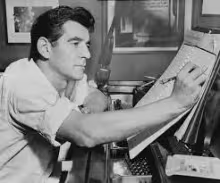
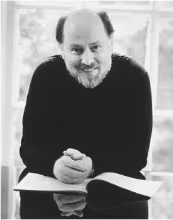
Born on August 25, 1918, in Lawrence, MA, to Ukrainian-Jewish immigrant parents, Leonard Bernstein was a child prodigy who began playing the piano at age 10. Despite his father's initial opposition, he flourished in music, studying at Harvard University and the Curtis Institute of Music, and later became a protégé of conductor Serge Koussevitzky at Tanglewood. 
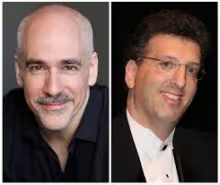
A Modern Twist on a Classic

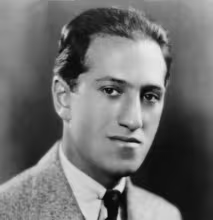
Paul Whiteman—a bandleader, composer, orchestral director, and violinist—wanted a piece that combined jazz and classical music for “An Experiment in Modern Music” concert to be premiered on February 12, 1924, at Aeolian Concert Hall in New York City. He commissioned George Gershwin (1898-1937) to compose the piece.

Where Charm Meets Brilliance

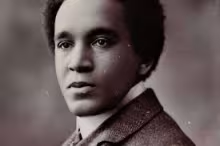
Born in 1875 to a white English mother, Alice Hare Martin, and a Sierra Leonean father, Samuel Coleridge-Taylor was raised by his mother and never knew his father, who had moved back to Sierra Leone before Samuel was born. Alice named Samuel after poet Samuel Taylor Coleridge, and, being from a family with many talented musicians, her father began teaching Samuel violin at a young age. It did not take very long for Samuel to surpass his grandfather’s abilities, at which point he enrolled in the new Royal College of Music.

Italian Passion in Prague

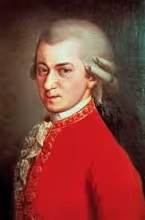
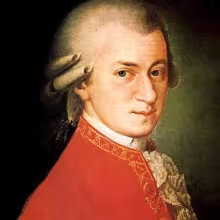
Wolfgang Amadeus Mozart's (1756-1791) Don Giovanni remains one of the most celebrated and influential operas in his impressive repertoire. Premiering on Oct. 29, 1787, the popularity of Don Giovanni spawned numerous arrangements and borrowings by future greats, including Franz Liszt, Frederic Chopin, and Ludwig van Beethoven, while "Là ci darem la mano" makes appearances in pop culture in the latter 20th century in Babette’s Feast and The Muppet Movie.

Studying Abroad in Italy

Wolfgang Amadeus Mozart (1756-1791) was born in Salzburg, Austria, to a musical family where he and his sister, Nannerl, received musical training at a very young age. At 5 years old, Mozart could already read and write music; by age 6, he was writing compositions and was an accomplished keyboard musician. Escorted by his father, Leopold, Mozart and his sister performed across Europe, including for audiences of French and English royal families.

Timeless Beauty and Vibrant Energy

Samuel Barber's (1910-1981) Adagio for Strings is a musical gem that has resonated with audiences for decades. Known for its emotional depth and hauntingly beautiful melody, this piece transports listeners to a realm where every note carries the weight of human experience. Originally part of the second movement of his String Quartet, the Adagio has found its way into the hearts of many through its transcendent orchestral arrangement.

Love, Loss, and Revenge

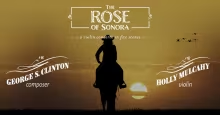
The Rose of Sonora by George S. Clinton (b. 1947) tells the story of Rose in five scenes (movements). This Western-style violin concerto’s outlaw cowgirl is portrayed by the violin solo performed by Holly Mulcahy.

The Romance of a Bygone Era

John Williams was born in New York City in 1932, the son of a jazz drummer, Johnny Williams. The Williams family moved to Los Angeles in 1948, where John attended North Hollywood High School. He studied composition privately and for a short time at UCLA before being drafted into the U.S. Air Force. During his service, he arranged band music and began conducting.
 

A Change of Heart

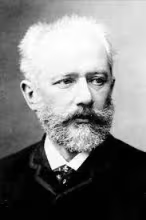
The Russian Romantic composer, Pyotr Ilyich Tchaikovsky (1840-1893), wrote his Piano Concerto No. 1 in B Flat Minor over a span of four months between 1874 and 1875. He wanted his colleague Nikolai Rubinstein to play the piece for its premiere; however, Rubinstein did not like the piece and refused to play it unless it was heavily edited. Tchaikovsky did not want to make any significant changes to his work, so he reached out to Hans von Bülow instead. The German pianist not only liked the composer’s music, but Tchaikovsky enjoyed von Bülow’s concert performances in Moscow.

A Choral Work as Symphony

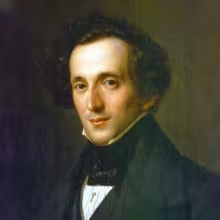
Felix Mendelssohn was a musical prodigy from a very young age. Mendelssohn’s family helped cultivate his talents beyond music, including lessons in literature and painting. He studied piano, which included some travel to Paris with his sister where he took piano lessons. During his boyhood, he composed 5 operas, 11 symphonies for string orchestra, concerti, and sonatas.