Logo

Evanston Symphony Orchestra

Lawrence Eckerling, Music Director

Romantic Era Visionary

Robert Schumann (1810–1856) was a German composer and pianist of the early Romantic era. He began piano lessons at age six and showed an early gift for capturing character and emotion in melody. He composed in all the main musical genres of the time, writing for solo piano, voice and piano, orchestra, chamber groups, choir, and opera. His works typify the spirit of the Romantic era in German music.
Not Associated With Any Emperor

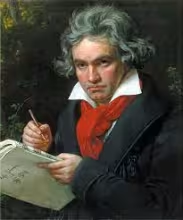
Ludwig van Beethoven’s (1770-1827) fifth and final piano concerto was commissioned by Archduke Rudolf, his friend and student. Beethoven began writing the piece in 1809, but the Napoleonic Wars made this difficult as Napoleon’s armies invaded Vienna. Nevertheless, Beethoven completed the piece, but the war delayed its premiere.

From Rivals to Lovers

Overcome by despair for his forbidden love and betrayal of his uncle, King Marke, Tristan casts his sword to the ground and allows himself to be impaled by his former friend’s sword. Tristan sees his own death as the only way to consummate his love with Isolde, whose fiancé he had killed before the start of the opera. Their relationship, originally defined by mortal rivalry, is transformed when the poison they were to drink to alleviate their grief is replaced with a love potion.

Jonathan Bailey Holland, Dean and Composer

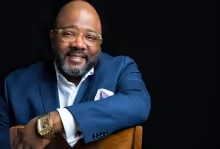
Jonathan Bailey Holland, current Dean and Professor of Music at Northwestern’s Bienen School of Music, was raised in Flint, Michigan, by music-loving parents who worked for the Flint schools. Music was always playing in their home, either on the radio or from his ­father’s extensive record collection of everything from jazz to classical. Jonathan says that all styles excited him from an early age and he responded to “any kind of music that made you move!”

"A Soviet artist's response to just criticism"

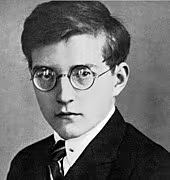
Dmitri Shostakovich (1906-1975), the Russian composer known for his many symphonies, chamber works, and concerti studied piano and composition at a young age. He achieved more success as a composer, and therefore, his public piano performances were often of his own pieces. As one of the most significant musical figures of the 20th century, his compositions widely varied in terms of style and emotion. 

Exploring the Nuances of a Theme

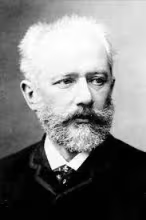
Russian composer Pyotr Ilyich Tchaikovsky was born on May 7, 1840, in Votkinsk, a small town in Vyatka Governorate within the Russian Empire. He had five brothers and one sister, with whom he was very close. He was initially educated for a career as a civil servant, but when the opportunity to study music arose, he took full advantage and entered the newly formed Saint Petersburg Conservatory, graduating in 1865. 

Bridging Traditions, Celebrating Heritage

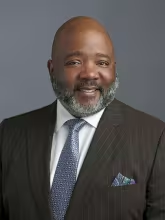
Jonathan Bailey Holland, born in 1974 in Flint, MI, is an acclaimed composer whose works have been performed by orchestras and ensembles worldwide. His music has been commissioned by prominent institutions such as the Atlanta, Cincinnati, and Detroit symphony orchestras, and chamber groups like Roomful of Teeth. Blending classical traditions with contemporary and popular influences, his compositions often explore themes of duality, social justice, and identity.

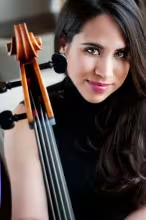
Christine Lamprea, Cellist by Default!

Christine Lamprea started life as a New Yorker, the child of Colombian immigrants, then became a Texan at age seven. She started cello lessons in fifth grade with members of the San Antonio Symphony in an after-school program — but if her parents had had a bigger car, Christine wouldn’t be a cellist at all! The cello was not Christine’s first choice of ­instrument; she wanted to play the bass, that wonderfully deep-voiced string instrument that can dwarf its player.

Passionate and Energetic Symphonic Dances

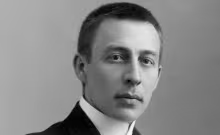
Sergei Rachmaninoff (1873-1943) was born into a musical family in the rural village of Semyonovo. He studied piano and composition at the Moscow Conservatory, graduating in 1892. A famous composer and virtuosic pianist, he also spent several years conducting, becoming conductor of the Bolshoi Theatre in 1904. After the Russian Revolution, he and his family settled in New York in 1918. 

An Armenian National Treasure

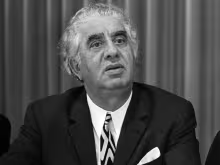
Aram Khachaturian is an Armenian national treasure. He was born to an Armenian family in Tbilisi, Georgia, in 1903 and is considered a leading composer of the Soviet Union. According to music historian Harlow Robinson, "his proletariat origins, non-Russian ethnic origins, and Soviet training [made him] a powerful symbol within the Soviet musical establishment.”