Logo

Evanston Symphony Orchestra

Lawrence Eckerling, Music Director

Finding Inspiration In Other Works
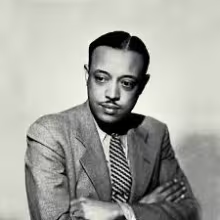
American composer William Grant Still (1895-1978) is known as the “Dean of African-American Classical Composers,” having written nearly 200 works including symphonies, ballets, operas, and more. In 1931, his first major orchestral composition, Symphony No. 1 “Afro-American,” was performed by the Rochester Philharmonic conducted by Howard Hanson. Not only was it the first time a complete score by an African American composer was performed by a major orchestra, but it also was one of the most popular symphonies by an American composer at the time. 
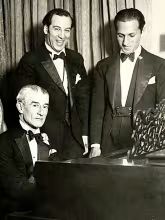
Mutual Admiration Society

At first glance, George Gershwin and Maurice Ravel might seem to occupy two very different musical worlds, yet they both shared a passion for jazz.

A Trip to the Old West

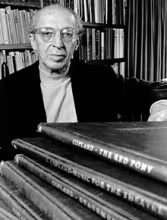
Aaron Copland, born in Brooklyn on Nov. 14, 1900, was destined to become one of America's most renowned composers. He first learned to play the piano from his older sister; at 16, he studied under the tutelage of Rubin Goldmark in Manhattan, which also allowed his interest in classical music to flourish, attending concerts by the New York Symphony and Brooklyn Academy of Music.

Jonathan Bailey Holland, Dean and Composer

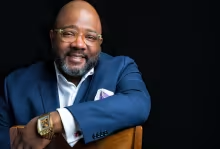
Jonathan Bailey Holland, current Dean and Professor of Music at Northwestern’s Bienen School of Music, was raised in Flint, Michigan, by music-loving parents who worked for the Flint schools. Music was always playing in their home, either on the radio or from his ­father’s extensive record collection of everything from jazz to classical. Jonathan says that all styles excited him from an early age and he responded to “any kind of music that made you move!”

Italian Passion in Prague

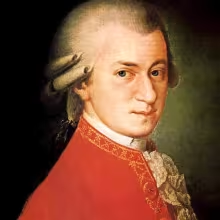
Wolfgang Amadeus Mozart's (1756-1791) Don Giovanni remains one of the most celebrated and influential operas in his impressive repertoire. Premiering on Oct. 29, 1787, the popularity of Don Giovanni spawned numerous arrangements and borrowings by future greats, including Franz Liszt, Frederic Chopin, and Ludwig van Beethoven, while "Là ci darem la mano" makes appearances in pop culture in the latter 20th century in Babette’s Feast and The Muppet Movie.

Studying Abroad in Italy

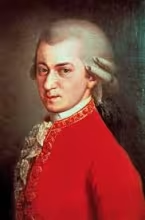
Wolfgang Amadeus Mozart (1756-1791) was born in Salzburg, Austria, to a musical family where he and his sister, Nannerl, received musical training at a very young age. At 5 years old, Mozart could already read and write music; by age 6, he was writing compositions and was an accomplished keyboard musician. Escorted by his father, Leopold, Mozart and his sister performed across Europe, including for audiences of French and English royal families.

"A Soviet artist's response to just criticism"

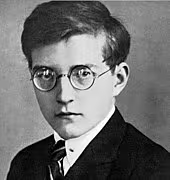
Dmitri Shostakovich (1906-1975), the Russian composer known for his many symphonies, chamber works, and concerti studied piano and composition at a young age. He achieved more success as a composer, and therefore, his public piano performances were often of his own pieces. As one of the most significant musical figures of the 20th century, his compositions widely varied in terms of style and emotion. 

Exploring the Nuances of a Theme

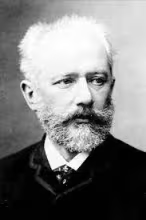
Russian composer Pyotr Ilyich Tchaikovsky was born on May 7, 1840, in Votkinsk, a small town in Vyatka Governorate within the Russian Empire. He had five brothers and one sister, with whom he was very close. He was initially educated for a career as a civil servant, but when the opportunity to study music arose, he took full advantage and entered the newly formed Saint Petersburg Conservatory, graduating in 1865. 

Bridging Traditions, Celebrating Heritage

Jonathan Bailey Holland, born in 1974 in Flint, MI, is an acclaimed composer whose works have been performed by orchestras and ensembles worldwide. His music has been commissioned by prominent institutions such as the Atlanta, Cincinnati, and Detroit symphony orchestras, and chamber groups like Roomful of Teeth. Blending classical traditions with contemporary and popular influences, his compositions often explore themes of duality, social justice, and identity.

Christine Lamprea, Cellist by Default!

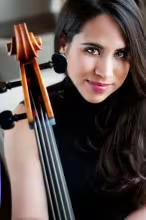
Christine Lamprea started life as a New Yorker, the child of Colombian immigrants, then became a Texan at age seven. She started cello lessons in fifth grade with members of the San Antonio Symphony in an after-school program — but if her parents had had a bigger car, Christine wouldn’t be a cellist at all! The cello was not Christine’s first choice of ­instrument; she wanted to play the bass, that wonderfully deep-voiced string instrument that can dwarf its player.