Logo

Evanston Symphony Orchestra

Lawrence Eckerling, Music Director

Dvořák's Joyous Symphony No. 8
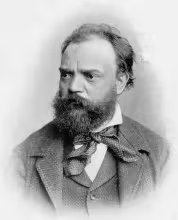
Czech composer Antonin Dvořák was born in 1841 in Nelahozeves (near Prague) in the Austrian Empire. The oldest of 14 children, Antonin’s upbringing in Nelahozeves nurtured his strong Bohemian heritage, which so strongly influenced his music. Dvořák took organ, piano, and violin lessons and at the young age of 14, composed the Forget-Me-Not Polka in C in 1855.
Vibrant Saxophone Melodies

The first saxophone was invented around 1840 in Brussels by Adolphe Sax, whose family was a maker of woodwind instruments. The metal-bodied, single-reed instrument was developed through the rest of the 19th century, primarily in French-speaking regions. Music with sax began to emerge in the 19th century and was used strikingly in important orchestral works in the early 20th. Earlier this season, you’ve heard saxophones at Pick-Staiger in both Rachmaninoff’s Symphonic Dances and Gershwin’s An American in Paris.

One-Hit Wonder

French composer Paul Dukas (1865-1935) is best known for a single orchestral work, The Sorcerer’s Apprentice. Based on a 1797 poem by Wolfgang von Goethe, the piece was written in 1897 and premiered later that same year in Paris with Dukas himself conducting the performance. The piece was an instant hit.

Timeless Beauty and Vibrant Energy

Samuel Barber's (1910-1981) Adagio for Strings is a musical gem that has resonated with audiences for decades. Known for its emotional depth and hauntingly beautiful melody, this piece transports listeners to a realm where every note carries the weight of human experience. Originally part of the second movement of his String Quartet, the Adagio has found its way into the hearts of many through its transcendent orchestral arrangement.

Love, Loss, and Revenge

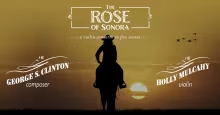
The Rose of Sonora by George S. Clinton (b. 1947) tells the story of Rose in five scenes (movements). This Western-style violin concerto’s outlaw cowgirl is portrayed by the violin solo performed by Holly Mulcahy.

The Romance of a Bygone Era

John Williams was born in New York City in 1932, the son of a jazz drummer, Johnny Williams. The Williams family moved to Los Angeles in 1948, where John attended North Hollywood High School. He studied composition privately and for a short time at UCLA before being drafted into the U.S. Air Force. During his service, he arranged band music and began conducting.
 

Passionate and Energetic Symphonic Dances

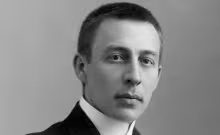
Sergei Rachmaninoff (1873-1943) was born into a musical family in the rural village of Semyonovo. He studied piano and composition at the Moscow Conservatory, graduating in 1892. A famous composer and virtuosic pianist, he also spent several years conducting, becoming conductor of the Bolshoi Theatre in 1904. After the Russian Revolution, he and his family settled in New York in 1918. 

An Armenian National Treasure

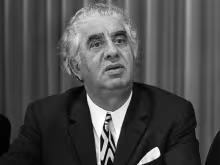
Aram Khachaturian is an Armenian national treasure. He was born to an Armenian family in Tbilisi, Georgia, in 1903 and is considered a leading composer of the Soviet Union. According to music historian Harlow Robinson, "his proletariat origins, non-Russian ethnic origins, and Soviet training [made him] a powerful symbol within the Soviet musical establishment.” 

A Birthday Gift

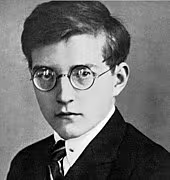
Dmitri Shostakovich (1906-1975), the Russian composer known for his many symphonies, chamber works, and concerti studied piano and composition at a young age. He achieved more success as a composer, and therefore his public piano performances were often of his own pieces. 

A Passionate Pastoral Symphony

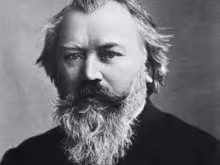
Johannes Brahms (1833-1897) was a German composer of the mid-romantic era. He was born in Hamburg but spent much of his life in Vienna. At a young age, he learned to play the violin and the basics of the cello. At age 7, he studied piano with Otto Friedrich Willibald Cossel. Cossel said Brahms “could be such a good player, but he will not stop his never-ending composing.” Brahms did in fact become a virtuoso pianist, but his compositions are what people know him best for today.