Logo

Evanston Symphony Orchestra

Lawrence Eckerling, Music Director

Emotional Romanticism in Musical Form
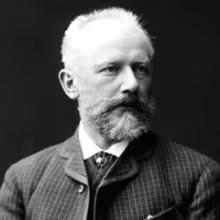
Tchaikovsky's Symphony No. 4 in F minor, Op. 36, was written in 1877, a momentous year for the composer. Tchaikovsky dedicated his Symphony No. 4 to his patroness, the heiress Nadezhda von Meck. He had begun composing the symphony not long after Meck had entered his life. He would complete it in the aftermath of his catastrophic marriage and claimed in a letter she would find in it "an echo of your most intimate thoughts and emotions."
An Unexpected Journey

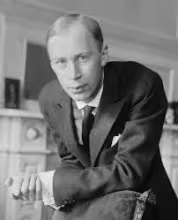
It was just over a year after the Russian Revolution when Prokofiev first left home to travel west to further his career, having secured permission from the commissar of culture under Vladimir Lenin. He made successful inroads in Chicago, and in just a few months, Prokofiev made his American debut with the Chicago Symphony Orchestra on December 6, 1918. The multitalented composer appeared as soloist for his First Piano Concerto and conductor for his Scythian Suite, and the Chicago audience responded to the performance by demanding seven curtain calls.

Composing for a ballet

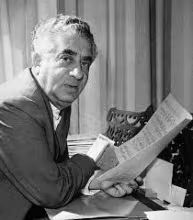
Aram Khachaturian, Armenia’s most important composer, is known around the world for his ballet music. He composed the music for Gayane, a ballet in three acts, that tells the story of a woman in an unhappy marriage who falls in love with another. The ballet premiered in 1942 by the Kirov Ballet, with the “Sabre Dance” being one of its most recognizable tunes.

Where Have I Heard This Before?

Ferdinand (Ferde) Grofé (1892-1972) was born in New York City and came from a long line of classically trained musicians. He was a part of an American orchestral music wave in the early 20th century that began to incorporate jazz, folk, and more complex harmonies into orchestral compositions. Gershwin might be the most recognizable name from this time, and Grofé and Gershwin were contemporaries and colleagues. Grofé is the orchestrater of Gershwin’s Rhapsody in Blue.

All That Jazz

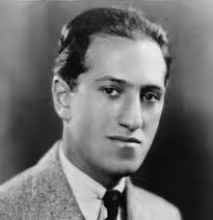
George Gershwin was already a popular Broadway songwriter by the time his Rhapsody in Blue premiered on February 12, 1924. This revolutionary work exploded onto the music scene and launched the young composer’s star into the stratosphere. Walter Damrosch, the conductor of the New York Symphony, was in the audience for that first performance, and a short time later he approached Gershwin about composing a piano concerto and serving as the work’s first soloist.

Diverse All-American Pieces and Composers

Called “riotously funky” by the Chicago Tribune, Jonathan Newman’s Blow It Up, Start Again was commissioned by the Chicago Youth Symphony Orchestra and premiered in 2012 at Orchestra Hall in Chicago. The piece continues to be performed by orchestras around the world. Trained as a pianist, trombonist, and singer, Newman’s music incorporates many styles from classical to jazz, and everything in between.

A New Favorite Soulful Evanston Tradition

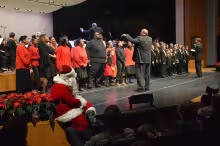
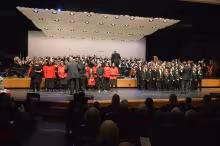
The Evanston Symphony Orchestra is delighted to again welcome the popular Evanston Symphony Holiday Gospel Choir led by Reverend Ken Cherry for the sixth year in a row! The Evanston Gospel Choir will perform "Oh, What a Pretty Little Baby." This is the first time they will perform this piece with full orchestra. The orchestration of this piece was graciously funded by the Evanston Arts Council.

Songs of the Season

Nothing brings fond holiday memories to mind quite like Christmas carols. The talented vocalists of the North Shore Choral Society will offer their renditions of See Amid the Winter’s Snow and the beloved Hallelujah Chorus from Handel’s Messiah. The rhythmic yet lyrical Gloria by Randol Bass is returning this year, which will also highlight the ESO brass section with its exultant fanfares.

Dance into the Holiday Season with Tchaikovsky’s Nutcracker Suite

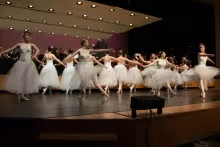
Watch the holiday classic of Tchaikovsky’s The Nutcracker come to life when the Evanston Symphony Orchestra joins forces with the Evanston Dance Ensemble. Not only is The Nutcracker one of the most popular ballets, but it is often performed during the holiday season due to its Christmastime setting. In fact, its music is often an introduction to classical music for audiences of all ages.

Transcendent Logic

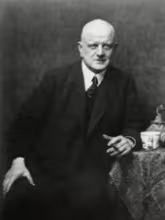
Even though Sibelius’ pieces such as Finlandia are more popular, his Symphony No. 1 is no less important. Sibelius premiered his Symphony No. 1 in 1899 and revised it in 1900.

Symphony No. 1 starts off its first movement slowly with a clarinet over a soft timpani roll and moves into a main theme in the strings. A contrasting theme is picked up by the woodwinds, then a standard development and recapitulation follow. The movement ends with two soft pizzicato chords in the strings.