Logo

Evanston Symphony Orchestra

Lawrence Eckerling, Music Director

A Centennial Celebration
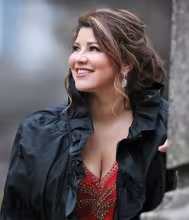
Candide is based on the 1758 novella by Voltaire, which satirized the fashionable philosophies of the day, particularly the tortures inflicted by the Catholic Church on supposed heretics during the Inquisition. Noting parallels to the controversial activities of the House Un-American Activities Committee, which sought to root out Communism in the United States, playwright Lillian Hellman proposed to Bernstein in 1953 that they adapt the novella for the musical theater.
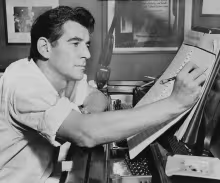
Celebrating the Bernstein Centennial with Chichester Psalms

Although Bernstein is probably best known for West Side Story, the composer, conductor, and pianist composed many pieces of music throughout his life including Chichester Psalms, an orchestral work with choir and boy treble. The ESO will be joined by the North Shore Choral Society and William Lewis, boy solo, to perform this Bernstein masterpiece.

Symphonic Satire and Beautiful Moments in an Obscure Opera

If something becomes popular, it will be made fun of. Gordon Jacob’s The Barber of Seville Goes To The Devil is a prime example of musical parody. Gioachino Rossini’s original opera, The Barber of Seville has been massively popular since it was first performed in 1816. Anyone marginally aware of the opera can hum tunes featured in the overture to the opera. In 1960 Jacob composed The Barber of Seville Goes To The Devil as a humorous homage to Rossini’s original.

A Successful Sequel

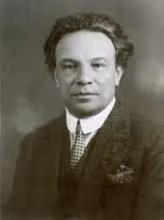
Ottorino Respighi, one of the great composer-conductor-pianists of his time, was born in Bologna and studied in St. Petersburg under Rimsky-Korsakov and in Berlin under Bruch. However, it was in Rome, where Respighi settled in 1913, that he found his true inspiration.

A Popular Concerto and a Suite with Two Versions

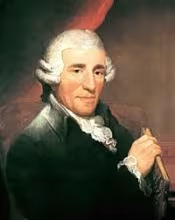
Haydn composed his Trumpet Concerto in E Flat in 1796 for his friend Anton Weidinger, who was also the developer of the keyed trumpet that could play chromatically. Unlike the natural trumpet, the keyed trumpet had four to six holes or keys similar to the flute; however, the keyed trumpet was ultimately not successful due to its poor sound quality. (Trumpets used today are called valved trumpets and were first introduced in the 1830s.) In fact, the piece is considered one of Haydn’s most popular concertos and is a favorite of trumpet players and classical music lovers everywhere.

Mendelssohn goaded into speed composing Overture for Ruy Blas

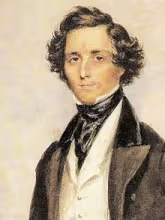
In 1839 the Theater Pension Fund asked Felix Mendelssohn to write an overture and a song for their production of Ruy Blas, a play by Victor Hugo. They hoped having Mendelssohn’s name attached to the production would bring in a larger audience. Mendelssohn did not care for the content of Ruy Blas (a rather violent and bloody play), but wanted to support the organization so he wrote the song.

A Symphony Twenty Years in the Making

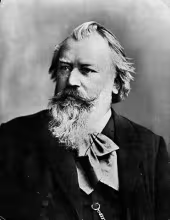
Johannes Brahms is recognized as one of the great composers of the Romantic period. His career took flight in the early 1850s thanks in no small part to the mentorship of Robert Schumann, one of the leading composers and critics of the day. He and his wife, Clara, a prominent piano soloist and composer in her own right, played significant roles in shepherding the career of young Brahms.

The One and Only

Schumann’s Piano Concerto in A Minor is the only piano concerto the composer ever wrote. Completed in 1845, it premiered later that same year; however, Schumann originally composed it as a one-movement piece for piano and orchestra. When he was unable to successfully sell the one-movement version to publishers, he revised it based on his wife Clara Schumann’s suggestion, eventually expanding it into a full three-movement concerto. In fact, Clara was the piano soloist when the piece premiered.

A Mellifluous Cultural Touchstone

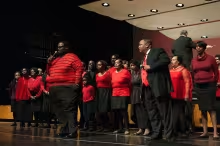
The Evanston Symphony Holiday Gospel Choir will perform Stand by Me with the ESO. The recent royal wedding between Prince Harry and Meghan Markle was our inspiration to include this wonderful number in our Holiday Concert. Stand By Me was originally a gospel song published in 1905 by Charles Albert Tindley: an amazing person in his own right - born son of a slave, self-educated, and a pastor. Ben E. King adapted the song for the Drifters in 1960. It quickly became a hit and an anthem of the Civil Rights Movement.

Songs of the Season

Wendel’s Wonderland of Snow Medley and Handel’s “Hallelujah Chorus” from Messiah will bring to mind golden holiday memories of years past, while the dramatic choruses of Handel’s oratorio Judas Maccabaeus will tell the triumphant tale of Hanukkah, bringing together the talented musicians of the North Shore Choral Society and the Evanston Children’s choir. New to the program this year are Forrest’s Angels from the Realms of Glory and Mager’s Kling Glöckchen Kling, a German Christmas carol from the 19th century.