Make sure your holiday season starts with the best holiday event in Evanston!
Don’t miss enjoying these favorite Yule festivities with your family and friends … and you can take advantage of our special rates for a package of 2 adult tickets and 3 children's tickets.
Holiday Concerts Venue:
Evanston Township High School Auditorium
1600 Dodge Avenue, Evanston
See map.
Tickets
All tickets are assigned seating.
Please call 847-864-8804 for wheelchair accessible tickets.
Advance Sales
$42 Adult, $36 Seniors, $5.00 Full-Time Student
Children Free
Children 12 and younger are admitted absolutely FREE, but must have an assigned seat.
Please call 847.864.8804 or email tickets@evanstonsymphony.org for all orders with children’s tickets.
At the Door Sales
$47 Adult, $41 Seniors, $5.00 Full-Time Student
2026–2027 SERIES SUBSCRIPTION
Three-concert Subscription
$111.75 Adults, $99.00 Seniors, $15 Students
Program
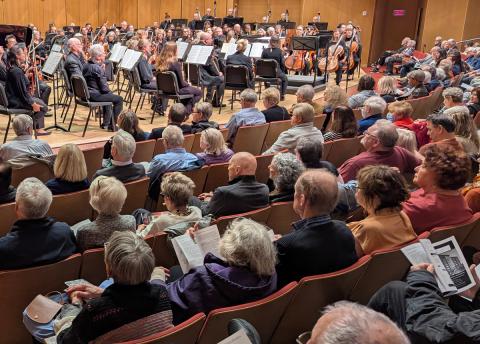
June 2014 Concert
Julian Arron in his final appearance as concertmaster
(Photos by Strike2 Photography)
March 2014 Concert
December 2013 Christmas Concert
Liszt Adds Romantic Flourishes to Classic Theme in "Totentanz"
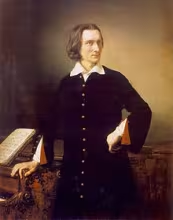
Based on the 14th century Gregorian plainchant melody “Dies irae” with daring stylistic innovations, Franz Liszt’s Totentanz presents a virtuoso opportunity for soloist Gleb Ivanov at the Evanston Symphony’s March 16 concert at 2:30 at Pick-Staiger Concert Hall.
ESO to Perform Bartók's Folk-inspired Masterpiece
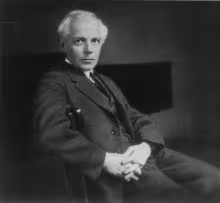
The Hungarian composer Béla Bartók, born in 1881, is regarded as one of the founders of the field of ethnomusicology. Bartók met the Hungarian composer Zoltán Kodály when he was a student at the Royal Academy of Budapest. The two composers traveled the Hungarian countryside to collect folk melodies and ultimately preserved thousands of songs. They transcribed the folk melodies, analyzed them and incorporated elements of the melodies in their own music. Over his lifetime, Bartók collected and arranged folk music from Hungary, Romania, Slovakia and Bulgaria.
Symphony Soundbites
Hungarian Connection
This second concert of the ESO’s 68th season showcases masterpieces by the two greatest Hungarian composers, Ferenc (Franz) Liszt and Béla Bartók, plus the most popular symphony by Finland’s greatest composer, Jean Sibelius. Hungary and Finland share the connection of their languages, which are related to each other and are both completely dissimilar to those of their surrounding countries. Equally important, the music of neither Hungary nor Finland is considered an integral part of the Austro-German “mainstream” taught in most music history classes.
Behind The Scenes at our March Concert
by Maestro Lawrence Eckerling
As a musician, one of the delights in learning music is hearing and identifying when a composer borrows from another composer or source, or borrows from him or herself. (A specific example is listening to the music of John Williams’ score to Star Wars, where he borrows music or style from seemingly every composer that I have ever studied!) We know that Bach borrowed music from himself, as did Handel, as did Mozart. The list goes on.
Patriotic or Not, Sibelius’ 2nd Symphony is Rousing

Jean Sibelius’ Second Symphony has long been associated with his native Finland’s bid for freedom from the heavy hand of neighboring Russia. In fact, the piece is known as the “Symphony of Independence,” and its rousing themes can easily be heard in that context.